
5 FABULOUS CHILDRENS BOOKS –CHECK THESE OUT FOR YOUR LITTLE ONES! CHILDRENS LITERATURE BY MARSHA CASPER COOK
LEAPING LIZARDS IT’S A CONFIDENCE POTION
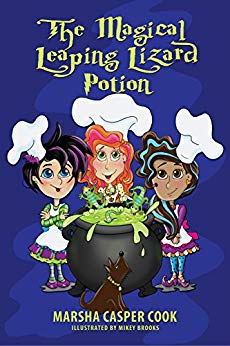
The Magical Leaping Lizard Potion is a fun imaginative read. Thirteen little girls make a potion that gives them confidence. This story shows how when a team works together great things can happen. This a fun imaginative read that makes you want to cheer the girls on.
Also available in Audible. Audible is very helpful in helping kids understand a story better when they listen and read at the same time
HARD COVER
https://www.amazon.com/Magical-Leaping-Lizard-Potion/dp/1604148845/ref=tmm_hrd_swatch_0?_encoding=UTF8&qid=&sr=
PAPERBACK
https://www.amazon.com/Magical-Leaping-Lizard-Potion/dp/1604141352/ref=tmm_pap_swatch_0?_encoding=UTF8&qid=&sr=
KINDLE
https://www.amazon.com/Magical-Leaping-Lizard-Potion-ebook/dp/B00KMWR5H2/ref=tmm_kin_swatch_0?_encoding=UTF8&qid=&sr=
AUDIBLE
 https://www.amazon.com/The-Magical-Leaping-Lizard-Potion/dp/B015G6I1RQ/ref=tmm_aud_swatch_0?_encoding=UTF8&qid=&sr=
This is a GREAT read for young teens!July 25, 2012
By J.D. HolidayVINE™ VOICE
Format:Paperback
The Magical Leaping Lizard Potion by Marsha Casper Cook
 Isabella
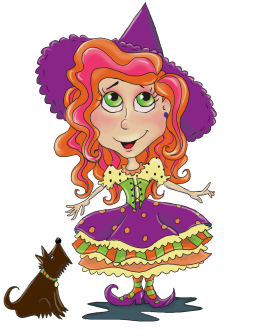
Pimpinella, her puppy, Milly Van Dilly and her young witch friends are
eager to develop into grown up witches. On the one night of the year
when this can be done they have the greatest sleepover ever. They fool
around with potions and rhythms in order to get it all right by
midnight!
Isabella
Pimpinella, her puppy, Milly Van Dilly and her young witch friends are
eager to develop into grown up witches. On the one night of the year
when this can be done they have the greatest sleepover ever. They fool
around with potions and rhythms in order to get it all right by
midnight!
The Magical Leaping Lizard Potion is hilariouslyentertaining when it comes to doing what young witches must do. This is a GREAT read for young teens!
~Author JD Holiday
WILL CHIPPY DISCOVER THAT BEING A COOKIE IS JUST A SPECIAL AS BEING A BROWNIE?
 Chippy
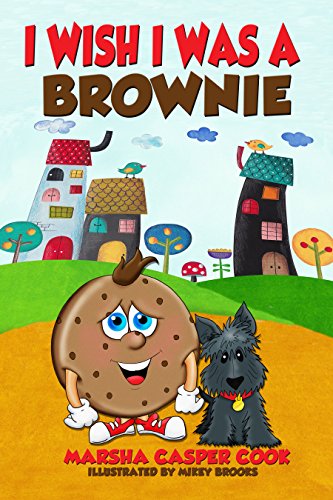
isn’t happy with who he is and wants to be a brownie. With help from
his teacher, Mrs. Chipster, he realizes he can be happy with who he is,
if he believes in himself. Children will not only relate to what has
happened to Chippy they will be pleased as they see sad Chippy become
happy being himself. This is a heartwarming storybook for early readers,
reading aloud at home, and as a bedtime story. Self Esteem is very
important no matter what age.Kids will be learning without feeling this
is a message.
Chippy
isn’t happy with who he is and wants to be a brownie. With help from
his teacher, Mrs. Chipster, he realizes he can be happy with who he is,
if he believes in himself. Children will not only relate to what has
happened to Chippy they will be pleased as they see sad Chippy become
happy being himself. This is a heartwarming storybook for early readers,
reading aloud at home, and as a bedtime story. Self Esteem is very
important no matter what age.Kids will be learning without feeling this
is a message.
If you also get the audio book children will love hearing the words as they read.
 HARD COVER
https://www.amazon.com/I-Wish-Was-Brownie/dp/1604148837/ref=tmm_hrd_swatch_0?_encoding=UTF8&qid=1535551894&sr=8-7
PAPERBACK
https://www.amazon.com/I-Wish-Was-Brownie/dp/1604148810/ref=tmm_pap_swatch_0?_encoding=UTF8&qid=1535551894&sr=8-7
KINDLE
https://www.amazon.com/I-Wish-Was-Brownie-ebook/dp/B017KYKTBI/ref=tmm_kin_swatch_0?_encoding=UTF8&qid=1535551894&sr=8-7
AUDIBLE
https://www.amazon.com/I-Wish-Was-Brownie/dp/B014I5PRA0/ref=tmm_aud_swatch_0?_encoding=UTF8&qid=1535551894&sr=8-7
 Great for Self-esteem
November 29, 2015
Format: Kindle Edition
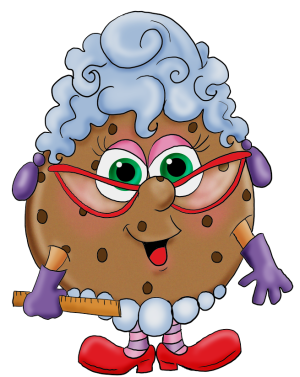
I don’t know how many times I hear my students wish they were someone else, or looked different. This story is just like their’s. Chippy is a chocolate chip cookie who wishes he was a brownie. In his mind if he was a brownie the other chippies wouldn’t laugh at him and he wouldn’t feel so alone. His teacher Mrs. Chipster invites him over to her house and presents him with a costume to try on. It is a brownie costume. As he looks at himself in the mirror he discovers it is what is inside and not on the outside that matters.
What a wonderful story.
I received a copy to facilitate my review. The opinions expressed here are my own.
TOO MANY SNACKS IS NOT A GOOD THING!
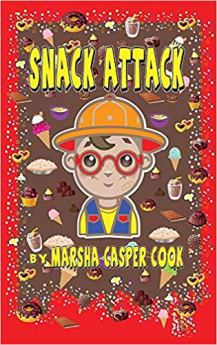 Addison
thinks he’s got the best mommy in the whole world when she lets him
have whatever he wants to eat for breakfast, lunch and dinner even when
it s chocolate candy, cookies and ice cream. Addison quickly learns how
easy it can be to have too much of a good thing and that mommies &
daddies really do know best!
Addison
thinks he’s got the best mommy in the whole world when she lets him
have whatever he wants to eat for breakfast, lunch and dinner even when
it s chocolate candy, cookies and ice cream. Addison quickly learns how
easy it can be to have too much of a good thing and that mommies &
daddies really do know best!
PAPERBACK
https://www.amazon.com/Snack-Attack-Marsha-Casper-Cook/dp/1604141239/ref=tmm_pap_swatch_0?_encoding=UTF8&qid=1535552325&sr=1-1
KINDLE
https://www.amazon.com/Snack-Attack-Marsha-Casper-Cook-ebook/dp/B00K22GK64/ref=tmm_kin_swatch_0?_encoding=UTF8&qid=1535552325&sr=1-1
AUDIBLE
https://www.amazon.com/Snack-Attack/dp/B016J843YK/ref=tmm_aud_swatch_0?_encoding=UTF8&qid=1535552325&sr=1-1
a yummy story for picky eaters
August 13, 2012
Format: Paperback
 SNACK ATTACK BY MARSHA CASPER COOK
REVIEW BY KAREN VAUGHAN
Addison Apple hate oatmeal. He would rather eat chocolate and other goodies all day long.
His mom allows him to feed himself whatever he wants. After chowing down on various kinds of junk food he gets sick and realises that oatmeal is okay after all and that mom is right about healthy food.
This is a great story for picky kids to learn too much of a good thing isn’t that great. It is written from a kids point of view and is suitable for primary school students. I will recommend this to parents with kids from four and older. I give this 5 chocolate chip cookies.
NO CLUES, NO SHOES—BEING DIFFERENT DOESN’T MEAN YOU CAN’T BE FRIENDS
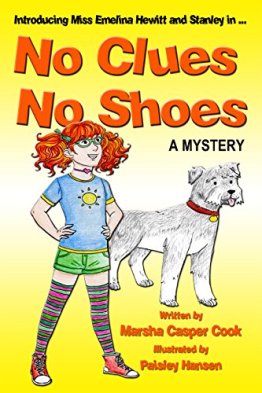 A
friendship develops between two kids when they solve the first of many
mystery cases. At first, they have nothing in common and didn’t see eye
to eye on anything. Addison likes to read and write stories inside, and
Emelina likes to be outdoors, jogging, skating, and just about anything
that keeps her active. She likes healthy food and Addison has a sweet
tooth. After a few weeks of friendship they realize even though they are
different they can still be great friends.
A
friendship develops between two kids when they solve the first of many
mystery cases. At first, they have nothing in common and didn’t see eye
to eye on anything. Addison likes to read and write stories inside, and
Emelina likes to be outdoors, jogging, skating, and just about anything
that keeps her active. She likes healthy food and Addison has a sweet
tooth. After a few weeks of friendship they realize even though they are
different they can still be great friends.
Also available in Audible. Audible is very helpful in helping kids understand a story better when they listen and read at the same time .
HARDCOVER
https://www.amazon.com/Clues-Shoes-Marsha-Casper-Cook/dp/1604144173/ref=tmm_hrd_swatch_0?_encoding=UTF8&qid=1535552733&sr=1-1
KINDLE
https://www.amazon.com/Clues-Shoes-Marsha-Casper-Cook-ebook/dp/B00K4CA61W/ref=tmm_kin_swatch_0?_encoding=UTF8&qid=1535552733&sr=1-1
AUDIBLE
https://www.amazon.com/No-Clues-Shoes/dp/B01311BQRU/ref=tmm_aud_swatch_0?_encoding=UTF8&qid=1535552733&sr=1-1
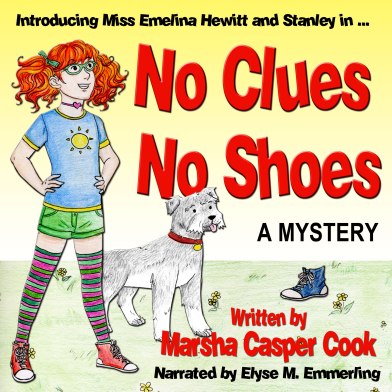 How much did I love this mystery!!
ByCindy McDonaldon August 3, 2017
Format: Kindle Edition
Read this wonderful children’s cozy mystery to my three granddaughters (ages: 11, 6, and 5) last night–they just loved it and so did I! Marsha Casper Cook certainly knows how to talk to kids and tell them a glorious tale! Emelina and her rather grumpy but very hungry friend AJ are very entertaining and let’s not forget her dog, Stanley! So much fun as they try to become real detectives while trying to find out who is stealing shoes in the neighborhood! Don’t miss this read! Your kids are gonna love it–5 STARS!
WHAT’S GOING ON ON THE BUSY BUS?
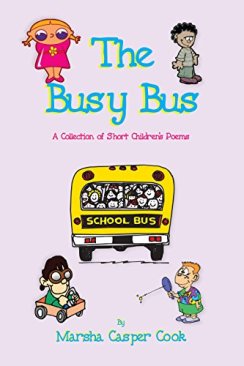 This
is a funny short-rhyming book. Kids will enjoy listening to these poems
over and over again and still be entertained by the magical words that
shout out, ” This is funny stuff.”
This
is a funny short-rhyming book. Kids will enjoy listening to these poems
over and over again and still be entertained by the magical words that
shout out, ” This is funny stuff.”
Caesar Burgess walked up to bat.
His knees were shaking, and that was that.
He tried and tried many times before
But was never, never able to score.
He looked out at the crowd
And gave them a nod
The gum he was chewing
Was now a large wad.
He took a deep breath
For hope and for luck.
Trying to remember
To hit, miss or duck.
He slowly moved back
Just a little bit.
He swallowed his pride
And smacked his lip.
All of a sudden
It happened so fast.
He hoped this feeling
Would always last!
He took a swing
And his bat hit the ball.
Suddenly he felt like
He was ten feet tall.
So he ran and he ran
And he ran some more.
And wouldn’t you know it?
This time he did score.
 HARDCOVER
https://www.amazon.com/Busy-Bus-Collection-Short-Childrens/dp/1604144718/ref=tmm_hrd_swatch_0?_encoding=UTF8&qid=1535553165&sr=8-1
PAPERBACK
https://www.amazon.com/Busy-Bus-Collection-Short-Childrens/dp/1604140631/ref=tmm_pap_swatch_0?_encoding=UTF8&qid=1535553165&sr=8-1
KINDLE
https://www.amazon.com/Busy-Bus-Collection-Short-Childrens-ebook/dp/B003NUQPH6/ref=tmm_kin_swatch_0?_encoding=UTF8&qid=1535553165&sr=8-1
AUDIBLE
https://www.amazon.com/Busy-Bus-Collection-Short-Childrens/dp/B074TW1G9Z/ref=tmm_aud_swatch_0?_encoding=UTF8&qid=1535553165&sr=8-1
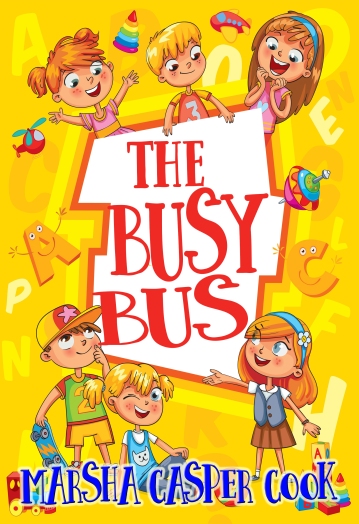 32 adorable poems to make kids giggle. Educational too…
August 28, 2014
Format: Kindle Edition
Not only do I enjoy reading children’s books to my youngest grand-children, I, myself, like reading them. And I love the illustrations.. I find the best books to be fun, clever and uplifting. And “The Busy Bus” is one of the most special ones I’ve read in a long time.
The 32 poems in this book cover an amazing range of things kids like to giggle about; from mean teachers to pink pigs, smelly socks to singing, flowers, fish and much more. I like that a single poem with a really cute illustration fits on a single page. Author Marsha Casper Cook planned her lay-out well, just as she did the topics of interest to children. She certainly knows a child’s mind.
My very favorite poem is the one about smelly socks; it made me giggle the most. And I really got a kick out of Isabella Pimpinella with her red umbrella. I could name many more, but you will have to read for yourself to truly enjoy this author’s talent.
I can’t wait to read this to little Maya or Christopher, but if they don’t visit soon, I’ll send a copy to their mothers so they can read to them.
This author has many children’s books on Amazon and since Isabella Pimpinella now has her own series, I already have “Isabella Pimpinella’s Magic Potion,”. I’m going to read that next. Looks like I’ll be on a kiddy-kick for a while trying to keep up with this precocious, lovable character.
Highly recommended…
Reviewed by Betty Dravis, August 28, 2014
Author of “The Toonies Invade Silicon Valley”
The Magical Leaping Lizard Potion is a fun imaginative read. Thirteen little girls make a potion that gives them confidence. This story shows how when a team works together great things can happen. This a fun imaginative read that makes you want to cheer the girls on.
Also available in Audible. Audible is very helpful in helping kids understand a story better when they listen and read at the same time
HARD COVER
https://www.amazon.com/Magical-Leaping-Lizard-Potion/dp/1604148845/ref=tmm_hrd_swatch_0?_encoding=UTF8&qid=&sr=
PAPERBACK
https://www.amazon.com/Magical-Leaping-Lizard-Potion/dp/1604141352/ref=tmm_pap_swatch_0?_encoding=UTF8&qid=&sr=
KINDLE
https://www.amazon.com/Magical-Leaping-Lizard-Potion-ebook/dp/B00KMWR5H2/ref=tmm_kin_swatch_0?_encoding=UTF8&qid=&sr=
AUDIBLE
This is a GREAT read for young teens!July 25, 2012
By J.D. HolidayVINE™ VOICE
Format:Paperback
The Magical Leaping Lizard Potion by Marsha Casper Cook
Isabella
Pimpinella, her puppy, Milly Van Dilly and her young witch friends are
eager to develop into grown up witches. On the one night of the year
when this can be done they have the greatest sleepover ever. They fool
around with potions and rhythms in order to get it all right by
midnight!The Magical Leaping Lizard Potion is hilariouslyentertaining when it comes to doing what young witches must do. This is a GREAT read for young teens!
~Author JD Holiday
WILL CHIPPY DISCOVER THAT BEING A COOKIE IS JUST A SPECIAL AS BEING A BROWNIE?
Chippy
isn’t happy with who he is and wants to be a brownie. With help from
his teacher, Mrs. Chipster, he realizes he can be happy with who he is,
if he believes in himself. Children will not only relate to what has
happened to Chippy they will be pleased as they see sad Chippy become
happy being himself. This is a heartwarming storybook for early readers,
reading aloud at home, and as a bedtime story. Self Esteem is very
important no matter what age.Kids will be learning without feeling this
is a message. If you also get the audio book children will love hearing the words as they read.
HARD COVERhttps://www.amazon.com/I-Wish-Was-Brownie/dp/1604148837/ref=tmm_hrd_swatch_0?_encoding=UTF8&qid=1535551894&sr=8-7
PAPERBACK
https://www.amazon.com/I-Wish-Was-Brownie/dp/1604148810/ref=tmm_pap_swatch_0?_encoding=UTF8&qid=1535551894&sr=8-7
KINDLE
https://www.amazon.com/I-Wish-Was-Brownie-ebook/dp/B017KYKTBI/ref=tmm_kin_swatch_0?_encoding=UTF8&qid=1535551894&sr=8-7
AUDIBLE
https://www.amazon.com/I-Wish-Was-Brownie/dp/B014I5PRA0/ref=tmm_aud_swatch_0?_encoding=UTF8&qid=1535551894&sr=8-7
Great for Self-esteemNovember 29, 2015
Format: Kindle Edition
I don’t know how many times I hear my students wish they were someone else, or looked different. This story is just like their’s. Chippy is a chocolate chip cookie who wishes he was a brownie. In his mind if he was a brownie the other chippies wouldn’t laugh at him and he wouldn’t feel so alone. His teacher Mrs. Chipster invites him over to her house and presents him with a costume to try on. It is a brownie costume. As he looks at himself in the mirror he discovers it is what is inside and not on the outside that matters.
What a wonderful story.
I received a copy to facilitate my review. The opinions expressed here are my own.
TOO MANY SNACKS IS NOT A GOOD THING!
Addison
thinks he’s got the best mommy in the whole world when she lets him
have whatever he wants to eat for breakfast, lunch and dinner even when
it s chocolate candy, cookies and ice cream. Addison quickly learns how
easy it can be to have too much of a good thing and that mommies &
daddies really do know best!PAPERBACK
https://www.amazon.com/Snack-Attack-Marsha-Casper-Cook/dp/1604141239/ref=tmm_pap_swatch_0?_encoding=UTF8&qid=1535552325&sr=1-1
KINDLE
https://www.amazon.com/Snack-Attack-Marsha-Casper-Cook-ebook/dp/B00K22GK64/ref=tmm_kin_swatch_0?_encoding=UTF8&qid=1535552325&sr=1-1
AUDIBLE
https://www.amazon.com/Snack-Attack/dp/B016J843YK/ref=tmm_aud_swatch_0?_encoding=UTF8&qid=1535552325&sr=1-1
a yummy story for picky eaters
August 13, 2012
Format: Paperback
SNACK ATTACK BY MARSHA CASPER COOKREVIEW BY KAREN VAUGHAN
Addison Apple hate oatmeal. He would rather eat chocolate and other goodies all day long.
His mom allows him to feed himself whatever he wants. After chowing down on various kinds of junk food he gets sick and realises that oatmeal is okay after all and that mom is right about healthy food.
This is a great story for picky kids to learn too much of a good thing isn’t that great. It is written from a kids point of view and is suitable for primary school students. I will recommend this to parents with kids from four and older. I give this 5 chocolate chip cookies.
NO CLUES, NO SHOES—BEING DIFFERENT DOESN’T MEAN YOU CAN’T BE FRIENDS
A
friendship develops between two kids when they solve the first of many
mystery cases. At first, they have nothing in common and didn’t see eye
to eye on anything. Addison likes to read and write stories inside, and
Emelina likes to be outdoors, jogging, skating, and just about anything
that keeps her active. She likes healthy food and Addison has a sweet
tooth. After a few weeks of friendship they realize even though they are
different they can still be great friends.Also available in Audible. Audible is very helpful in helping kids understand a story better when they listen and read at the same time .
HARDCOVER
https://www.amazon.com/Clues-Shoes-Marsha-Casper-Cook/dp/1604144173/ref=tmm_hrd_swatch_0?_encoding=UTF8&qid=1535552733&sr=1-1
KINDLE
https://www.amazon.com/Clues-Shoes-Marsha-Casper-Cook-ebook/dp/B00K4CA61W/ref=tmm_kin_swatch_0?_encoding=UTF8&qid=1535552733&sr=1-1
AUDIBLE
https://www.amazon.com/No-Clues-Shoes/dp/B01311BQRU/ref=tmm_aud_swatch_0?_encoding=UTF8&qid=1535552733&sr=1-1
How much did I love this mystery!!ByCindy McDonaldon August 3, 2017
Format: Kindle Edition
Read this wonderful children’s cozy mystery to my three granddaughters (ages: 11, 6, and 5) last night–they just loved it and so did I! Marsha Casper Cook certainly knows how to talk to kids and tell them a glorious tale! Emelina and her rather grumpy but very hungry friend AJ are very entertaining and let’s not forget her dog, Stanley! So much fun as they try to become real detectives while trying to find out who is stealing shoes in the neighborhood! Don’t miss this read! Your kids are gonna love it–5 STARS!
WHAT’S GOING ON ON THE BUSY BUS?
This
is a funny short-rhyming book. Kids will enjoy listening to these poems
over and over again and still be entertained by the magical words that
shout out, ” This is funny stuff.” Caesar Burgess walked up to bat.
His knees were shaking, and that was that.
He tried and tried many times before
But was never, never able to score.
He looked out at the crowd
And gave them a nod
The gum he was chewing
Was now a large wad.
He took a deep breath
For hope and for luck.
Trying to remember
To hit, miss or duck.
He slowly moved back
Just a little bit.
He swallowed his pride
And smacked his lip.
All of a sudden
It happened so fast.
He hoped this feeling
Would always last!
He took a swing
And his bat hit the ball.
Suddenly he felt like
He was ten feet tall.
So he ran and he ran
And he ran some more.
And wouldn’t you know it?
This time he did score.
HARDCOVERhttps://www.amazon.com/Busy-Bus-Collection-Short-Childrens/dp/1604144718/ref=tmm_hrd_swatch_0?_encoding=UTF8&qid=1535553165&sr=8-1
PAPERBACK
https://www.amazon.com/Busy-Bus-Collection-Short-Childrens/dp/1604140631/ref=tmm_pap_swatch_0?_encoding=UTF8&qid=1535553165&sr=8-1
KINDLE
https://www.amazon.com/Busy-Bus-Collection-Short-Childrens-ebook/dp/B003NUQPH6/ref=tmm_kin_swatch_0?_encoding=UTF8&qid=1535553165&sr=8-1
AUDIBLE
https://www.amazon.com/Busy-Bus-Collection-Short-Childrens/dp/B074TW1G9Z/ref=tmm_aud_swatch_0?_encoding=UTF8&qid=1535553165&sr=8-1
32 adorable poems to make kids giggle. Educational too…August 28, 2014
Format: Kindle Edition
Not only do I enjoy reading children’s books to my youngest grand-children, I, myself, like reading them. And I love the illustrations.. I find the best books to be fun, clever and uplifting. And “The Busy Bus” is one of the most special ones I’ve read in a long time.
The 32 poems in this book cover an amazing range of things kids like to giggle about; from mean teachers to pink pigs, smelly socks to singing, flowers, fish and much more. I like that a single poem with a really cute illustration fits on a single page. Author Marsha Casper Cook planned her lay-out well, just as she did the topics of interest to children. She certainly knows a child’s mind.
My very favorite poem is the one about smelly socks; it made me giggle the most. And I really got a kick out of Isabella Pimpinella with her red umbrella. I could name many more, but you will have to read for yourself to truly enjoy this author’s talent.
I can’t wait to read this to little Maya or Christopher, but if they don’t visit soon, I’ll send a copy to their mothers so they can read to them.
This author has many children’s books on Amazon and since Isabella Pimpinella now has her own series, I already have “Isabella Pimpinella’s Magic Potion,”. I’m going to read that next. Looks like I’ll be on a kiddy-kick for a while trying to keep up with this precocious, lovable character.
Highly recommended…
Reviewed by Betty Dravis, August 28, 2014
Author of “The Toonies Invade Silicon Valley”

This entry was posted in CHILDRENS LITERATURE, GUEST BLOGGERS, MARSHA CASPER COOK and tagged #BookBoost, ADVENTURE, CHILDRENS LIT, fun, LEARNING, MUSTREAD. Bookmark the permalink.


